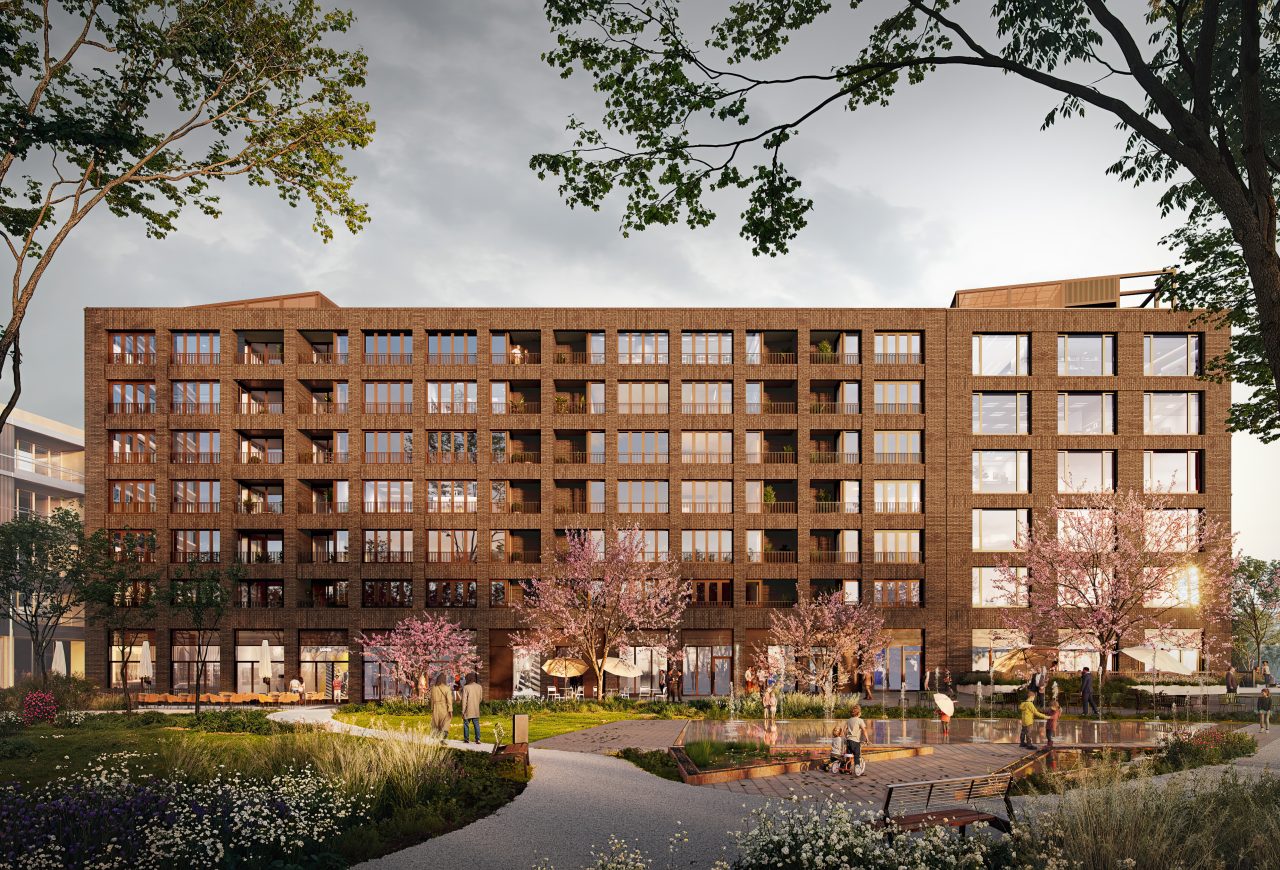
Mixed-Use Developments: The Future of Sustainable Urban Districts
The way we plan our cities is undergoing a fundamental shift. Climate change, new mobility concepts, and hybrid work models present urban planners and developers with entirely new challenges. At the same time, there is a growing demand for urban spaces that are not only functional but also highly livable.
The response to this trend is increasingly clear: Mixed-Use Developments – districts where living, working, shopping, dining, and public spaces are intelligently interconnected.
For Nordhafen Living & Office, this approach serves as the very foundation of the entire project development.
Why Mixed-Use Districts Are Becoming Increasingly Important
For many decades, cities were often planned around segregated functions. Residential areas, business districts, and shopping centers were physically separated from one another. This resulted in long commutes, heavy traffic, and neighborhoods that only came alive during specific times of the day.
Today, the picture is completely different. Modern urban development aims to bring the various areas of our lives closer together. People want to live, work, and enjoy their leisure time within short distances. This benefits not only the residents but also businesses, local shops, and the environment.
International studies confirm this shift:
- A study published in 2024 in the Journal of Urban Mobility shows that people use their cars significantly less when workplaces, shopping opportunities, and services are reachable within short distances. Short commutes encourage walking and cycling, making a vital contribution to sustainable mobility.
- An international study in Nature Human Behaviour, which analyzed movement data from around 40 million mobile phones, arrived at a clear conclusion: the accessibility of daily amenities explains about 84 percent of the differences in mobility behavior between cities. In other words, urban structures influence our daily lives far more than many technical solutions do.
Mixed-Use Means More Than Just Living and Working
A modern district today consists of far more than just residential and office spaces. The key lies in the synergy of diverse uses.
These include, among others:
- Modern residential options
- Flexible working environments
- Retail and dining
- Public squares and green spaces
- Sustainable mobility options
- Short distances between all functions
This synergy creates vibrant districts that are active throughout the entire day and are capable of adapting to societal changes over the long term.
Nordhafen Living & Office: Implementing the Approach Consistently
With Nordhafen Living & Office, precisely such a mixed-use district is currently taking shape in Berlin’s Europacity. Construction is progressing on schedule, with completion slated for early 2027. Even today, it is becoming clear how this development will intelligently connect living, working, and urban life.
The project combines around 150 modern rental apartments with 7,500 square meters of flexible office space, alongside complementary retail and dining options. Its direct proximity to Berlin Central Station, the waterfront location, and short distances between living, working, and leisure create an urban environment tailored to the demands of modern city planning.
Yet, this is about more than just high-quality architecture. Today, sustainability also means shortening daily commutes, creating high-quality public spaces to spend time in, and offering people a place where different areas of life naturally intertwine.
The Future of the City Is Built in the District
International organizations like the Urban Land Institute (ULI) view mixed-use districts as a crucial building block for resilient and sustainable cities. At the same time, successful business districts worldwide are increasingly transforming into urban neighborhoods where living, working, culture, and leisure are closely interwoven.
This development demonstrates that the quality of a city is not determined by individual buildings alone, but by how well a district functions as a whole.
With Nordhafen Living & Office, JTRE Germany is pursuing exactly this approach. The project represents a new generation of urban districts – sustainably planned, flexibly designed, and consistently aligned with the needs of the people.


